A VP of Engineering owns the machine that builds the product: the people, the teams, the process, and the delivery. The one thing not on that list is the technology bets, those stay with the CTO.
That single sentence resolves most of the confusion around the title. The rest of this guide covers what the role owns in practice, how it splits from CTO, and when a company needs one.
I held this seat myself, at Mews I took the engineering org from 8 to 80 people through Series C while the roadmap kept shipping, so what follows comes from the operator side rather than from a framework.
What a VP of Engineering owns
- Delivery. The roadmap ships or it doesn’t, and when it doesn’t, the question lands on the VPE’s desk, not on the PM’s and not on the teams’.
- The org. Team topology, spans of control, when to split a team, when to add a management layer. Getting this wrong costs quarters.
- Hiring and the bar. Headcount plan, interview loops, closing senior candidates. At scale-up pace this is half the calendar.
- The management team. Engineering managers and directors report here. Their growth, their performance, their alignment. A VPE who skips 1:1s with their EMs is running blind.
- Process and predictability. Planning cadence, incident response, quality gates, enough process to stay predictable without suffocating the teams.
- Translation. The exec team speaks revenue and dates, engineering speaks scope and risk, and the VPE converts between the two without losing signal.
VP of Engineering vs CTO
| VP of Engineering | CTO | |
|---|---|---|
| Faces | Inward: org, delivery | Outward and forward: strategy, board |
| Owns | Teams, hiring, process, shipping | Technology bets, architecture direction |
| Measured by | Roadmap delivery, org health, retention | Right technology calls, technical moat |
| Reports to | CEO, sometimes CTO | CEO |
| Code | Rarely | Depends on stage, often prototypes |
| Fails when | Roadmap slips, managers churn | Company bets on the wrong stack |
The two roles are complementary peers, not a stack. In companies under about 30 engineers one person usually holds both jobs, and the split becomes necessary when that person’s calendar fills up with people problems while the technology direction starts drifting. Watch for the drift, as opposed to any particular headcount number.

For the CTO side of this boundary, I keep a separate practice: CTO mentoring.
When a company adds the role
So when does a company add a VPE? Three common triggers, from the sessions where this decision was on the table:
- A founder-CTO is drowning in management and knows it. The VPE hire gives them their technical job back.
- Engineering passed 25 to 30 people and delivery got slower with every hire. That’s an org problem, and org problems need an owner.
- The board asked “who runs engineering?” during due diligence and the honest answer was “sort of everyone”.
The wrong trigger: hiring a VPE to fix a broken product strategy. A VPE makes the machine run, and if the machine is building the wrong thing, you have a different problem.
Getting into the role, and surviving it
Most VPEs come up through engineering manager and director roles, and the jump is bigger than it looks: a director improves their group, a VPE owns the whole system, including the parts nobody wants, compensation fights, reorgs, the underperforming manager everyone likes. I mapped the exact shape of that jump in How to Become a VP of Engineering: The Three Gaps.
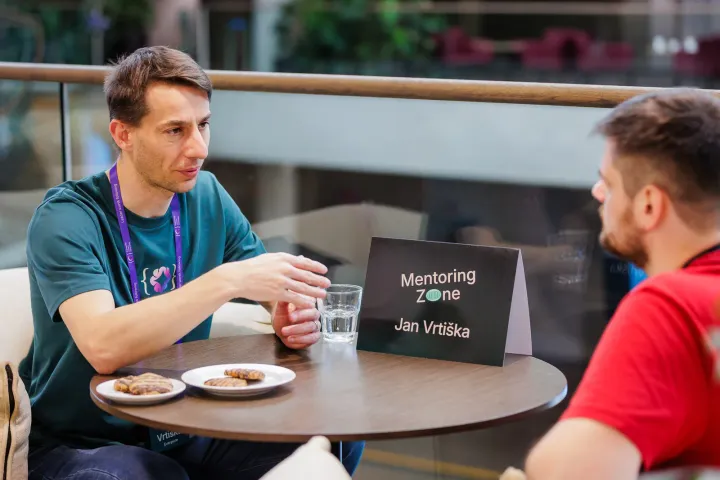
52% of the leaders I mentor are in their first leadership role at their level, and across 3,400+ mentoring sessions with 300+ engineering leaders the same pattern keeps repeating with new VPEs: they keep doing their old director job for six months because it feels productive, while the exec-level work, the org design, the translation layer, stays unowned.
If you’re stepping into this role, or fighting for it, that transition is exactly what 1:1 mentoring for engineering leaders is built for. First intro session is free.
Related roles
- VP of Engineering @ Mews: a look back on my 1st year. The diary version of this guide, written from inside the seat.
- Engineering Director: what the role really is
- Head of Engineering: what the title means
- CTPO: one executive for product and technology
- Mentor vs coach: which one you need