Engineering leadership is owning the outcomes of an engineering organization: what ships, who builds it, how fast, at what quality. The title matters far less than the scope.
Management is one tool inside that scope, and some of the strongest engineering leaders I work with have zero reports.
I write this from the operator side. I built the engineering org at Mews through Series C, from 8 to 80, while the roadmap kept shipping. Since 2019 I’ve run 3,400+ mentoring sessions with 300+ engineering leaders across 17+ countries. This page is the map I draw for them in session one.
Leadership vs management
The two words get used interchangeably. They aren’t the same job.
| Engineering management | Engineering leadership | |
|---|---|---|
| Is | A role with reports | Influence over outcomes, at any level |
| Tools | 1:1s, hiring, performance, planning | Technical direction, org design, persuasion, the roadmap |
| Held by | EMs, directors, VPEs | Anyone from staff engineer to CTO |
| Fails when | The team churns or stalls | The org ships the wrong thing well |
A staff engineer who steers an architecture decision across five teams is leading, whether or not anyone reports to them. A manager who spends the week running status meetings is managing, and that’s about it. The industry promotes people into management and calls it leadership; the two overlap about as much as driving and navigation.
The role ladder
Titles overlap brutally between companies. A “Head of Engineering” at a 30-person startup outranks a “VP of Engineering” at a 40-person one exactly never; scope decides, not the name. The ladder, with a full guide for each rung:
- Team lead. First rung. Still codes, now also owns a team’s delivery. The messiest title in the industry: half the companies mean tech lead, half mean junior EM. Deciding whether to step on this rung at all is its own question: should I become a team lead.
- Engineering manager. The full people role: hiring, 1:1s, performance, delivery. The rung where most careers stall or take off, and the most common reason leaders book mentoring. The EM-to-VPE jump further up the ladder is a different, bigger gap.
- Staff engineer. The IC counterweight to the EM. Leads through technical direction across teams, no reports.
- Engineering director. Runs a group of teams through EMs. From this rung up, the calendar is mostly other people’s teams.
- Head of engineering. Scope chameleon: anything from senior EM to de-facto VPE, depending on company size.
- VP of Engineering. Owns the whole machine: org, delivery, hiring, process. Peer to the CTO, not below.
- CTO, or CTPO. Technology bets, architecture direction, the board conversation. The CTPO variant folds product in.
What the job demands
52% of the leaders I mentor are in their first leadership role at their level. The gaps that show up in sessions are rarely the ones the books cover:
- Staying technical enough. You don’t have to out-code your engineers, but you need enough hands-on judgment on architecture, estimates, and code quality that nobody can wave a fake number past you. The leaders who lose this end up relaying status upward and adding nothing to it. With AI tooling reshaping how teams ship, this bar just moved up again: leaders who can’t evaluate what AI-assisted engineering output is worth are negotiating blind.
- Making org decisions early. Team splits, management layers, spans of control. Structure drifts if nobody owns it, and undoing drift costs quarters.
- Translation. The exec team speaks revenue and dates, engineering speaks scope and risk, and every rung of the ladder above team lead is partly a translation job.
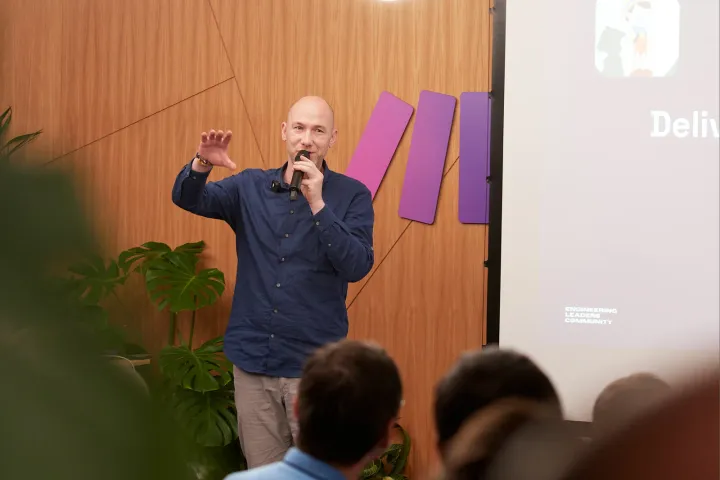
One more thing the US-centric content mill won’t tell you: most engineering leadership advice is written for Silicon Valley headcounts and Silicon Valley option packages. In Central Europe you scale with different constraints: smaller talent pools, different comp math, teams spread across three countries by default. That gap is why the ELC community exists, and why my mentoring is grounded in CEE scale-ups, as opposed to recycled US playbooks.
Where to go from here
If you’re climbing this ladder, or stuck on a rung, that is literally the job of 1:1 mentoring for engineering leaders: Staff Engineer to CTO, first intro session free.
If you want the numbers behind the anecdotes: engineering leadership statistics, updated from real session data.